10 Inspiring Dry Creek Bed Ideas for a Garden Landscape
We may earn a commission through all links on this website. As an Amazon Associate, we earn from qualifying purchases.
As the seasons change and the rain dwindles, many of us find ourselves staring at a once-thriving garden bed now reduced to a dry, barren expanse of dirt and rocks. But fear not, dear gardeners! For in this moment of drought-induced despair, lies an opportunity to get creative and transform that desolate dry creek bed into a stunning focal point in your outdoor space.
With a little imagination and some thoughtful design, you can turn what was once a liability into a beautiful and functional feature that not only adds visual interest but also helps to manage rainwater runoff and create a sense of serenity in your garden.

WOODLAND SCENICS C1141 Ready Rocks Creek Bed Rocks
(as of March 1, 2026 09:54 GMT -05:00 - More infoProduct prices and availability are accurate as of the date/time indicated and are subject to change. Any price and availability information displayed on [relevant Amazon Site(s), as applicable] at the time of purchase will apply to the purchase of this product.)Add Colorful River Rocks for Contrast
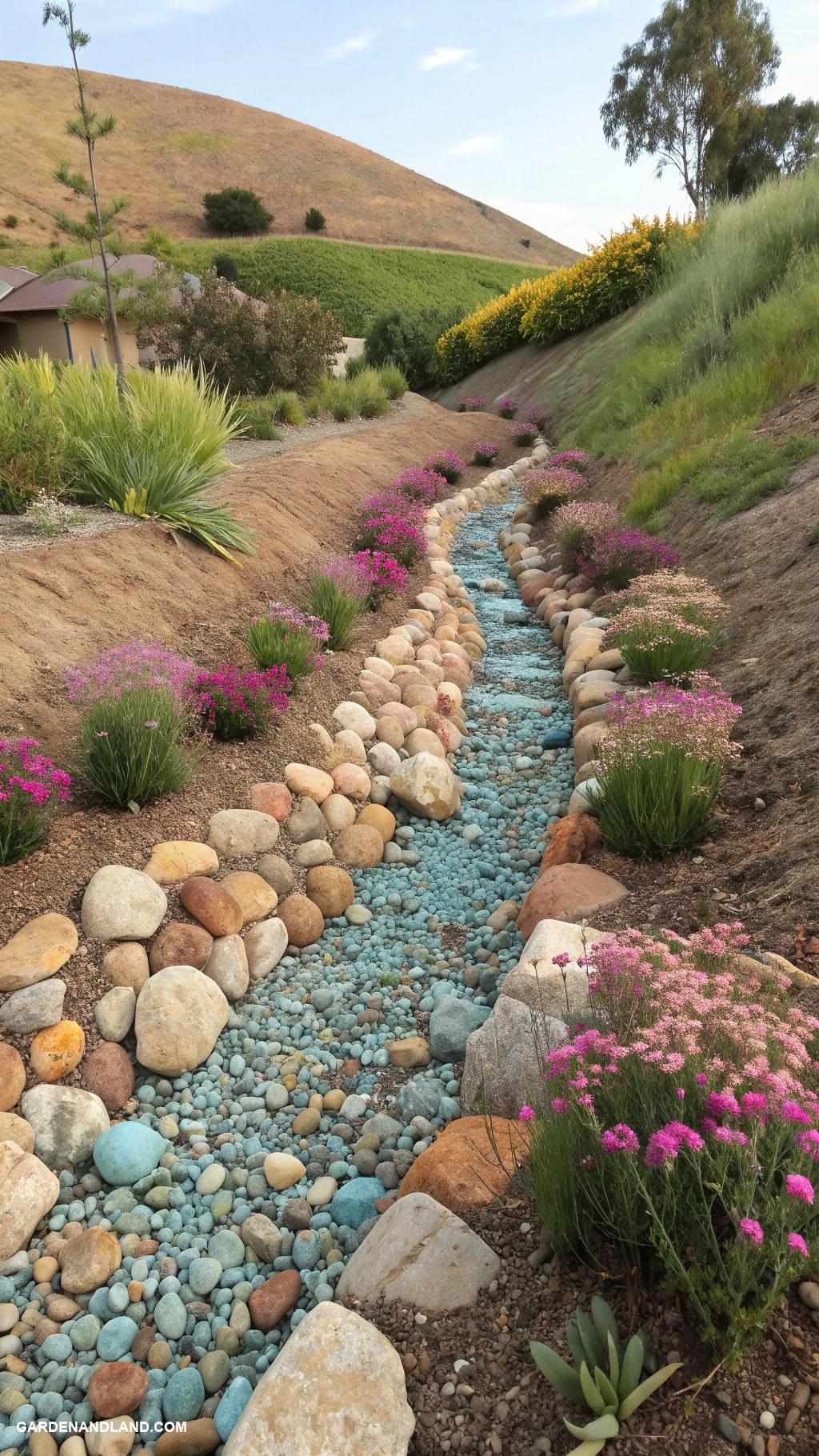
Add colorful river rocks to your dry creek bed to create a striking visual contrast that enhances your garden’s overall appeal. These vibrant stones not only provide texture and interest but also help to define the edges of your landscape features. Choose a variety of sizes and colors to complement the surrounding plants and materials, making your dry creek bed a focal point. The interplay of colors can beautifully reflect sunlight, drawing the eye and adding a touch of natural elegance to your outdoor space.
Incorporate Native Plants for Biodiversity
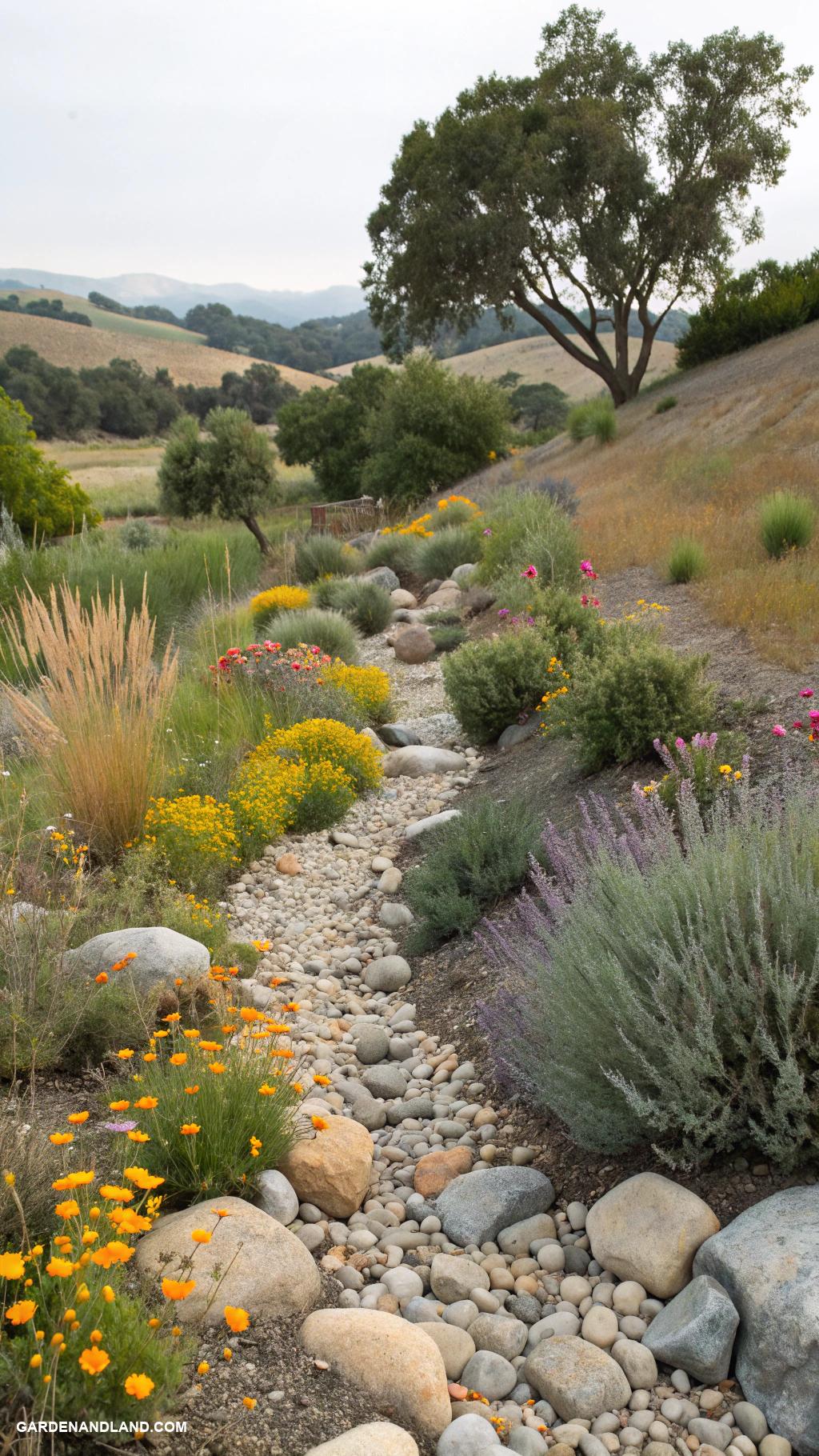
Incorporating native plants into a dry creek bed not only enhances the aesthetic appeal of your garden but also promotes biodiversity. These plants are well-adapted to local climate and soil conditions, making them resilient and low-maintenance. By attracting local wildlife, such as pollinators and beneficial insects, a native plant selection supports a thriving ecosystem. Furthermore, native species require less water and fertilizer, making them an environmentally friendly choice for sustainable landscaping.
Create Meandering Paths with Stones
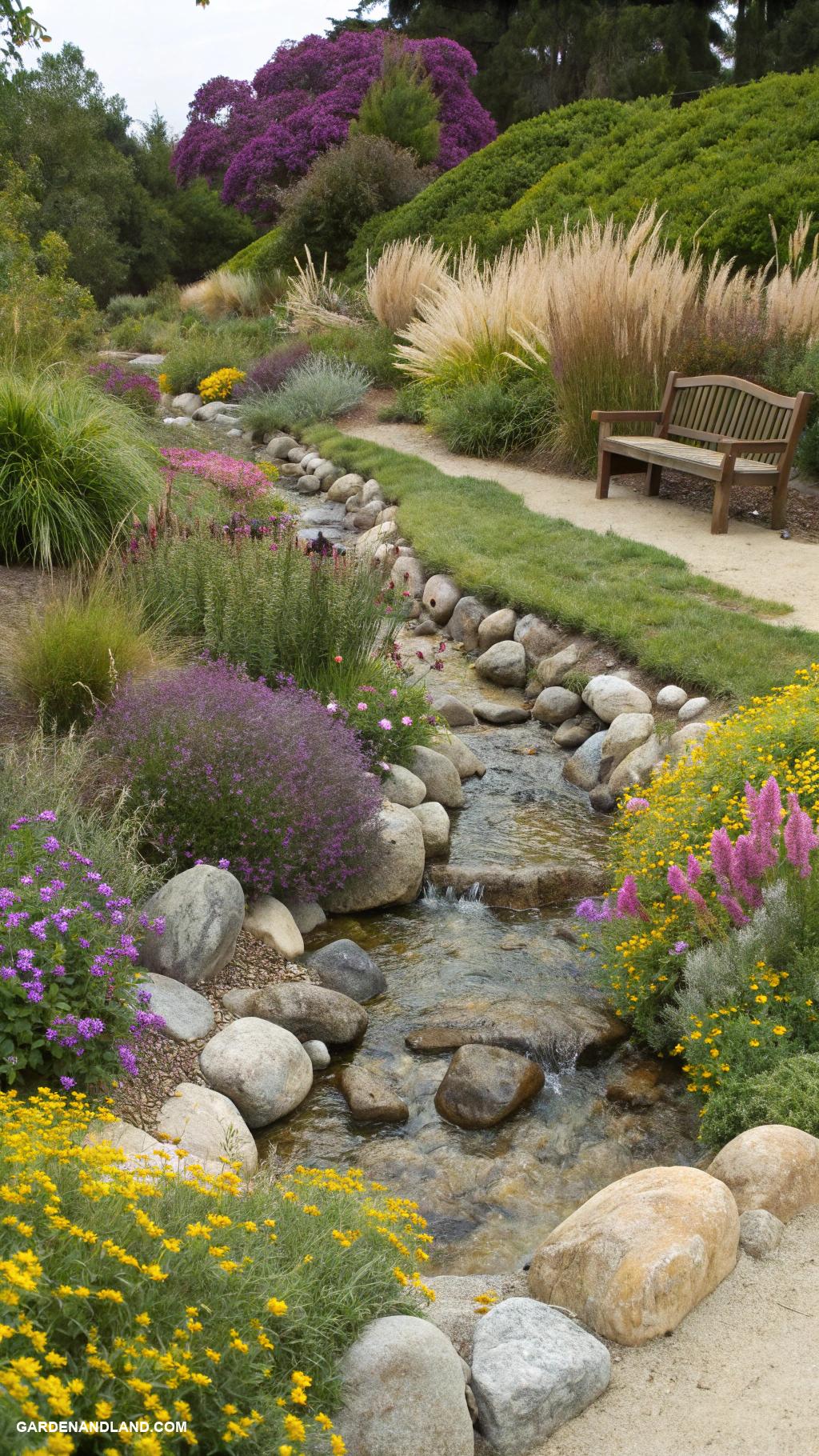
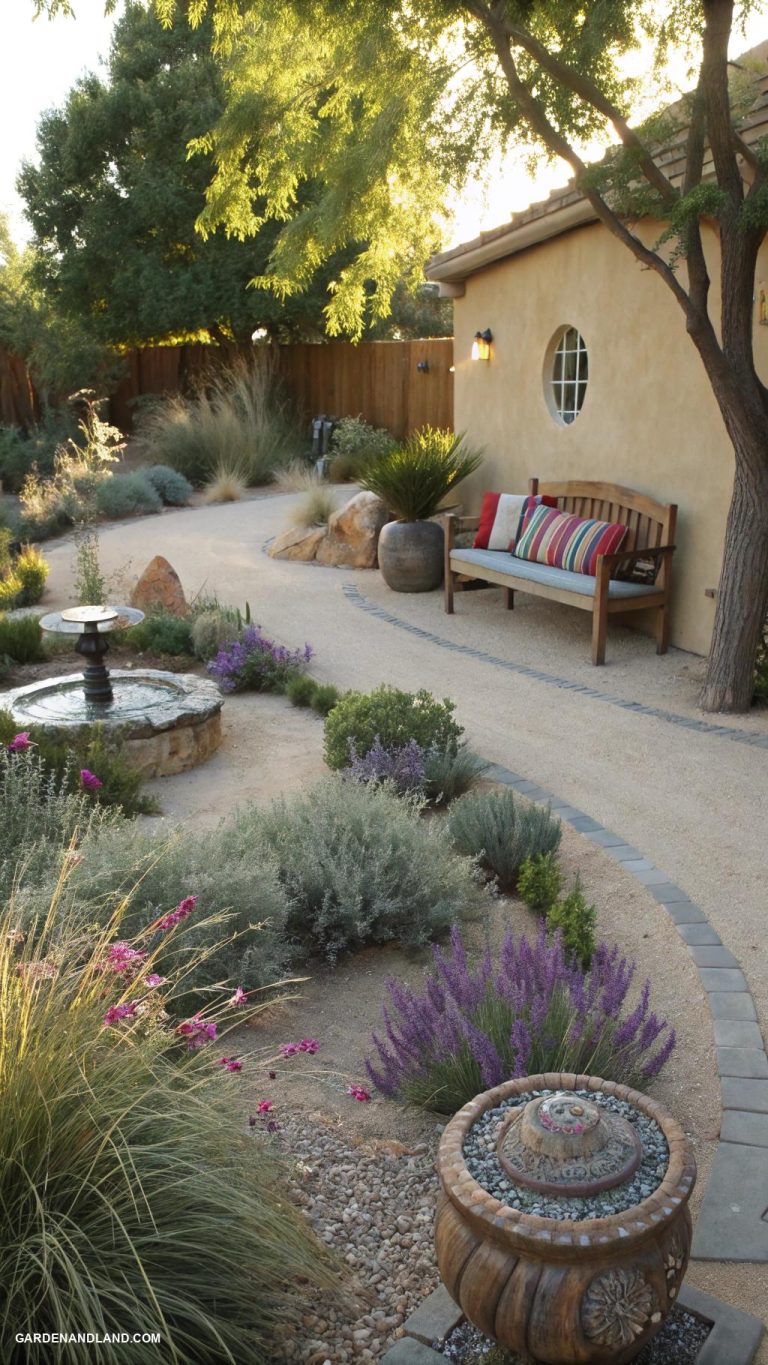
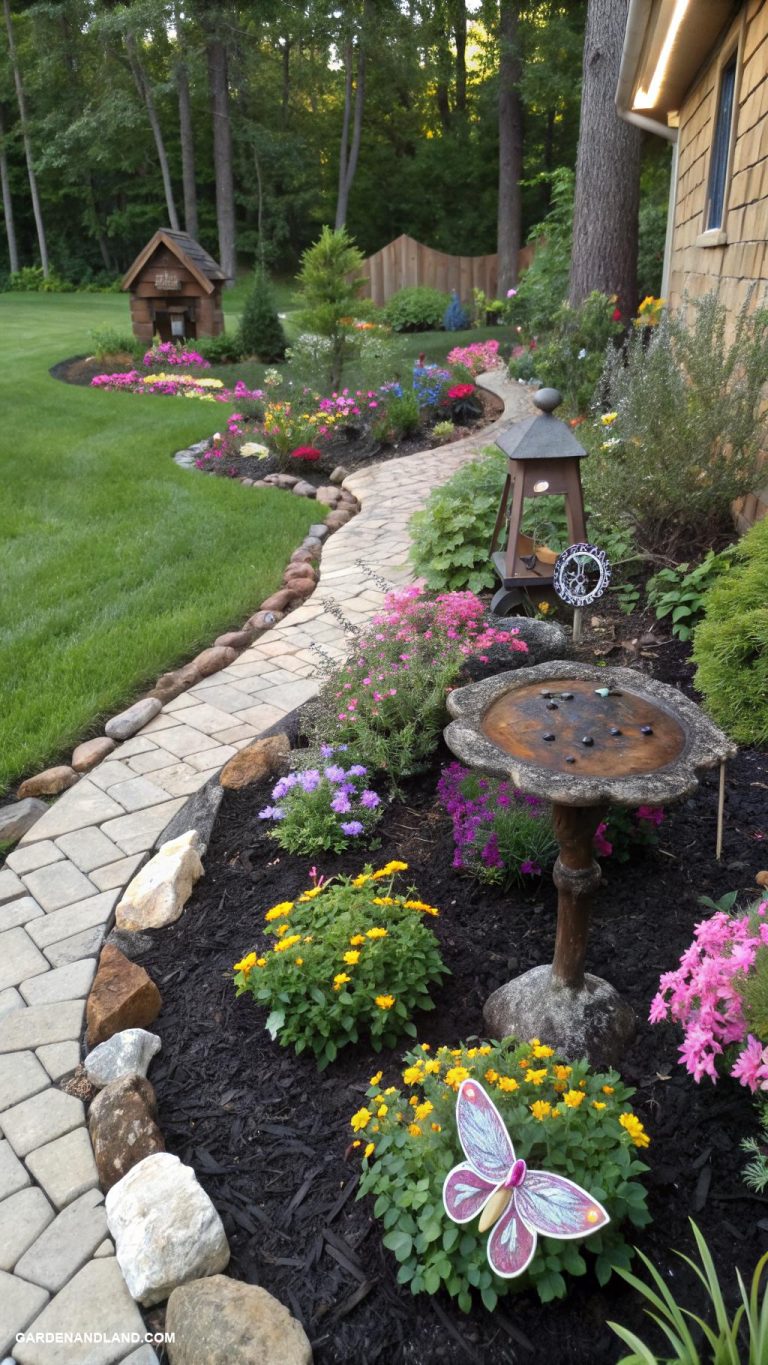
Creating meandering paths with stones in a dry creek bed adds both visual interest and functionality to your garden. Select a variety of natural stones to mimic the organic flow of water, allowing the pathway to blend seamlessly with the surrounding landscape. Incorporate gentle curves and varying sizes of stones to create a naturalistic look, encouraging exploration through your garden. This design not only enhances the aesthetic appeal but also provides a practical route for enjoying the beauty of your outdoor space.
Use Driftwood for Organic Accents
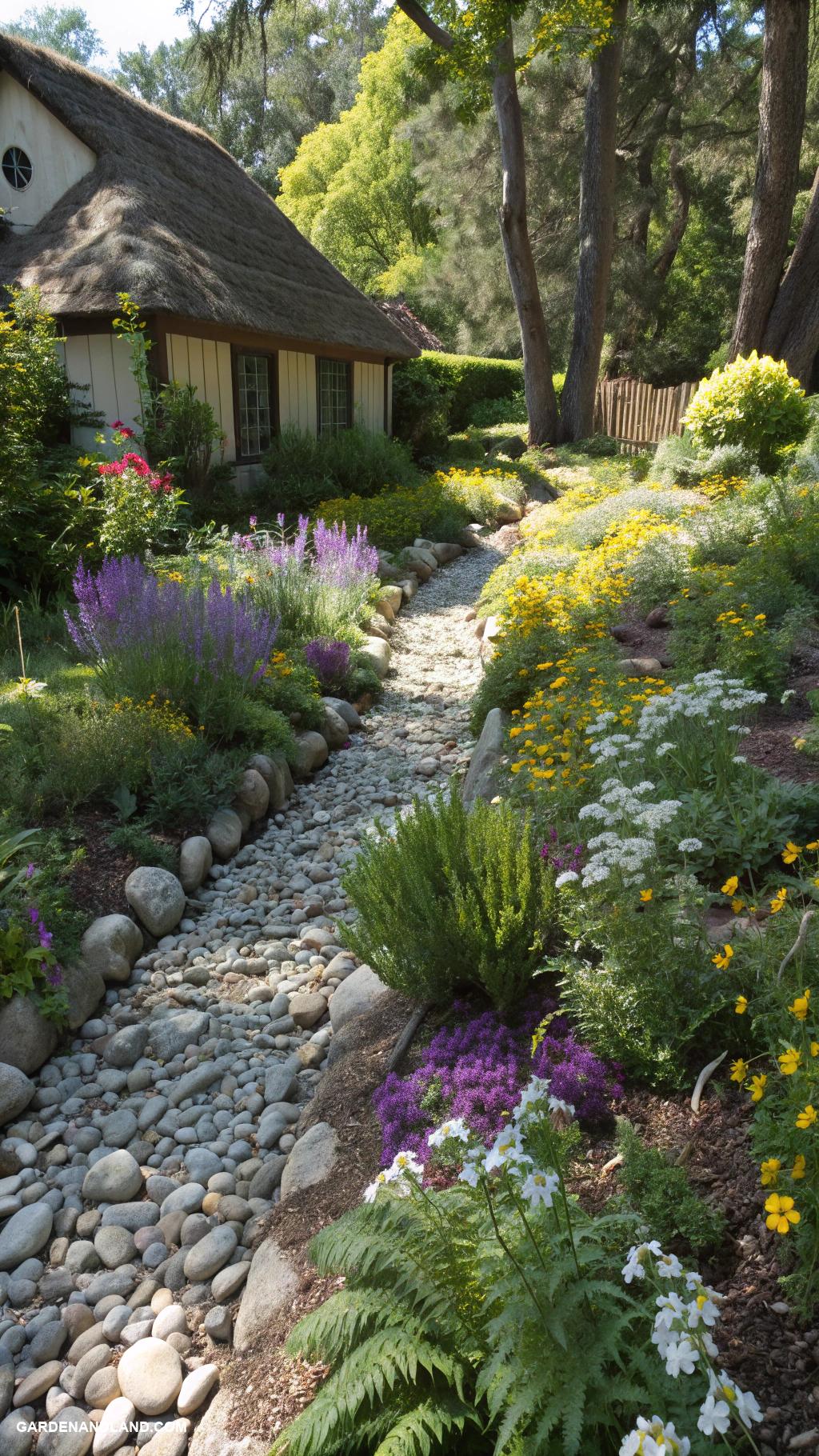
Incorporating driftwood into a dry creek bed design not only enhances its organic appeal but also adds texture and visual interest. The natural, weathered look of driftwood contrasts beautifully with the smooth stones typically found in creek beds, creating a harmonious blend with the surrounding landscape. Use larger pieces as focal points and smaller twigs to fill gaps, mimicking the natural patterns of water movement. This sustainable choice brings a touch of nature’s artistry to your garden, making it both inviting and serene.
Install Fairy Lights for Evening Charm
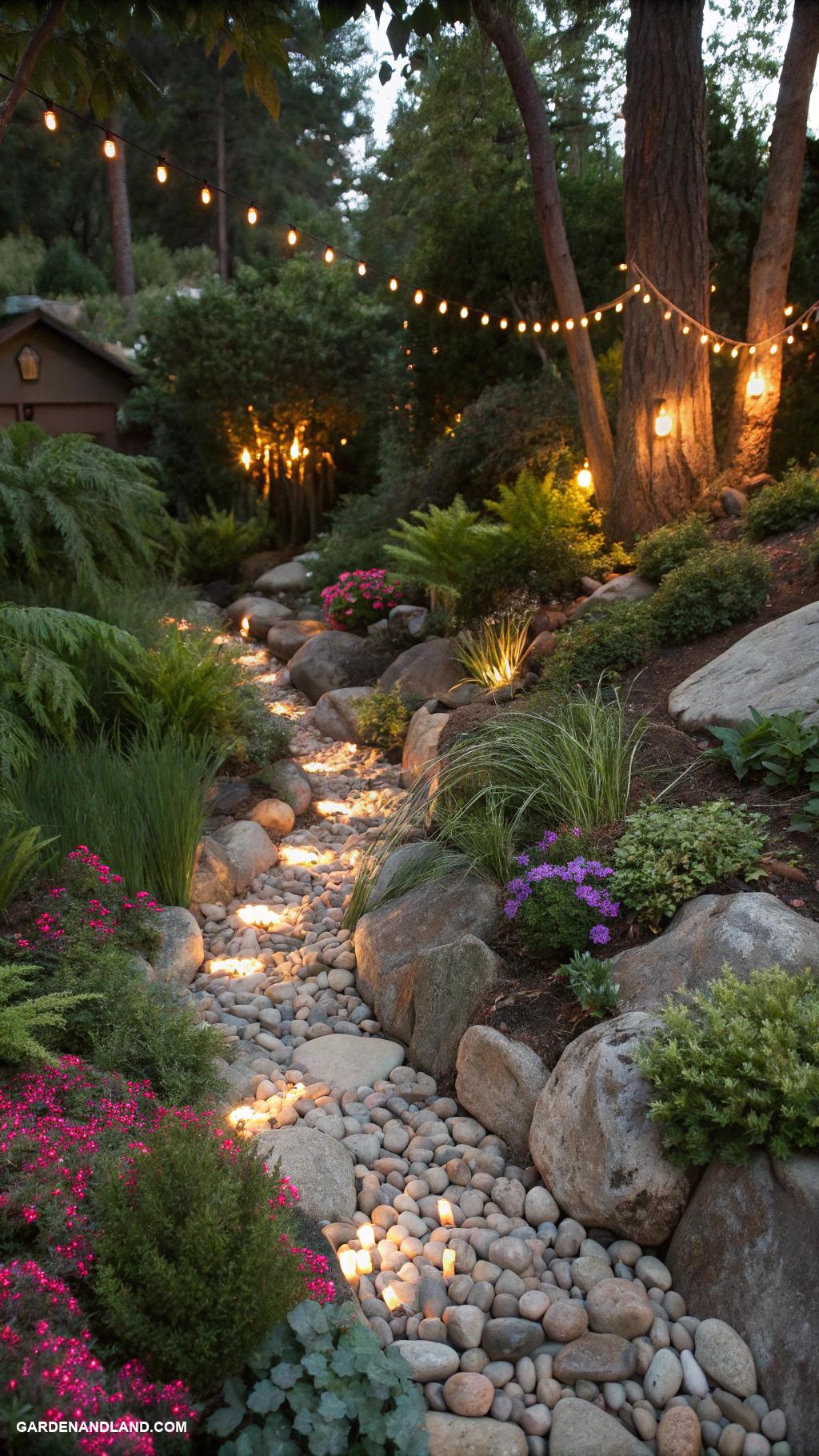
Installing fairy lights along a dry creek bed can transform your garden into a magical evening retreat. The soft glow of the lights reflects off the stones and plants, creating a mesmerizing atmosphere that highlights the natural beauty of the landscape. As night falls, the gentle flicker adds a whimsical charm, inviting you to linger and enjoy the serene ambiance. This simple enhancement not only illuminates the pathway but also enhances the overall design of your outdoor space.
Include a Small Waterfall Feature
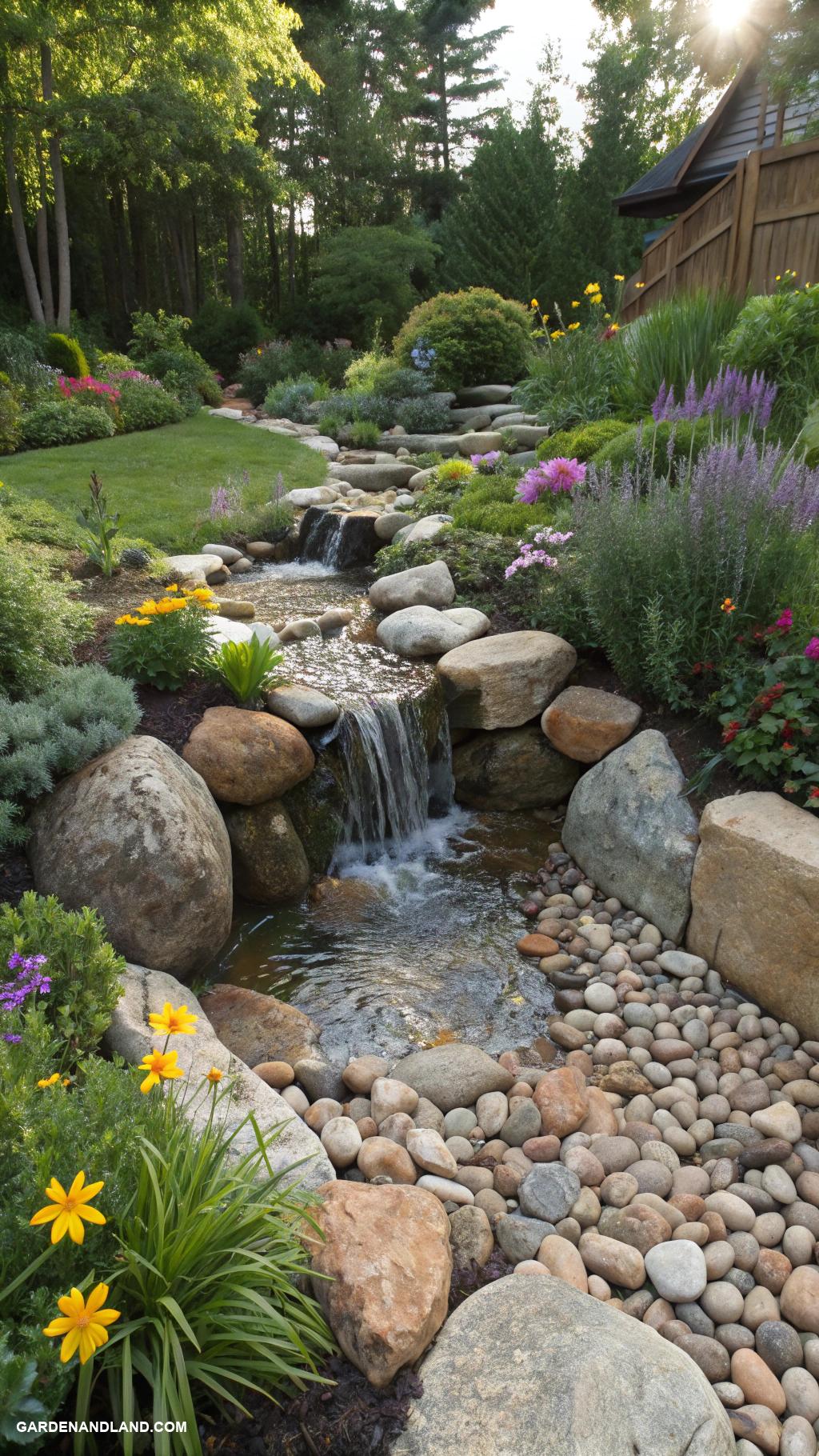
A small waterfall feature cascading over smooth stones can bring a sense of tranquility and movement to a dry creek bed in your garden. The gentle sound of water trickling down creates a soothing atmosphere, attracting wildlife such as birds and butterflies. Surrounding the waterfall with drought-tolerant plants and native grasses enhances the natural look and ensures low maintenance. This stunning focal point not only elevates the visual appeal of your landscape but also promotes a serene outdoor retreat.
Plant Succulents Along the Edges
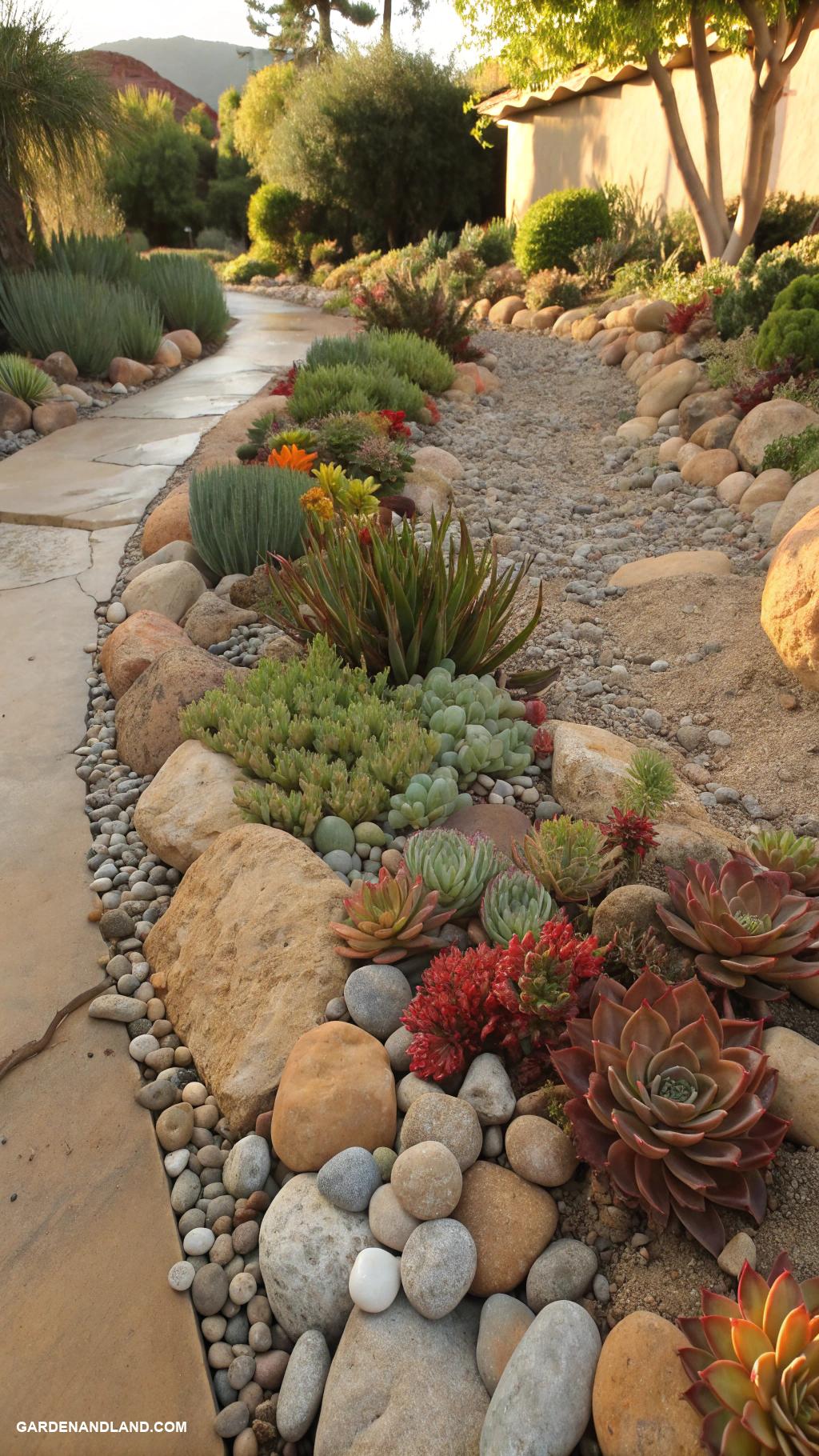
Planting succulents along the edges of a dry creek bed adds both texture and beauty to your garden landscape. Their hardy nature and drought-resistant qualities make them an ideal choice for this setting, as they thrive in well-drained soil and require minimal maintenance. By selecting a variety of shapes and colors, you can create a visually appealing contrast against the smooth stones and flowing lines of the creek bed. This arrangement not only enhances the natural aesthetics but also helps to reduce soil erosion, making it a practical addition to your outdoor space.
Design a Seating Area by the Creek
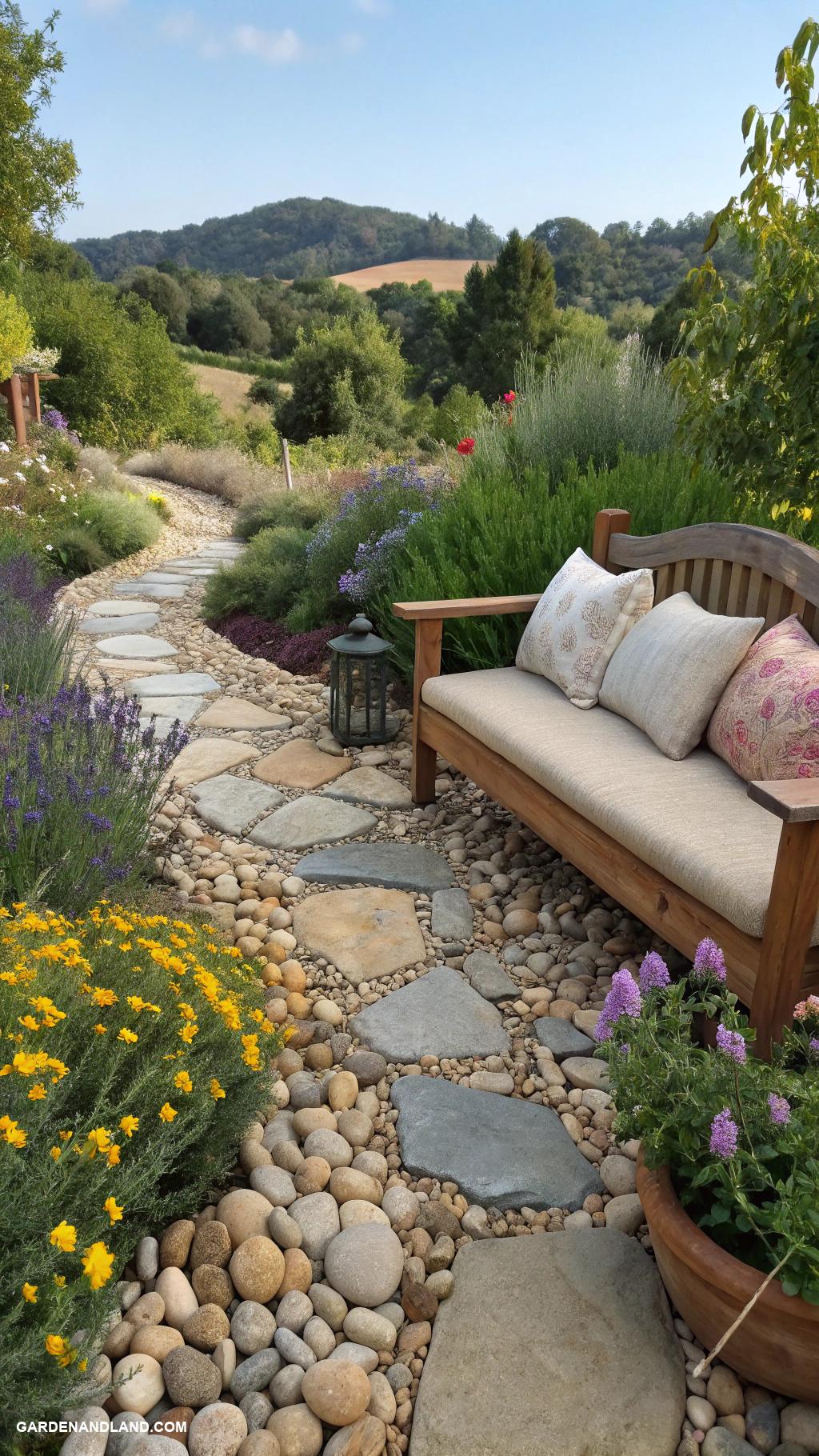
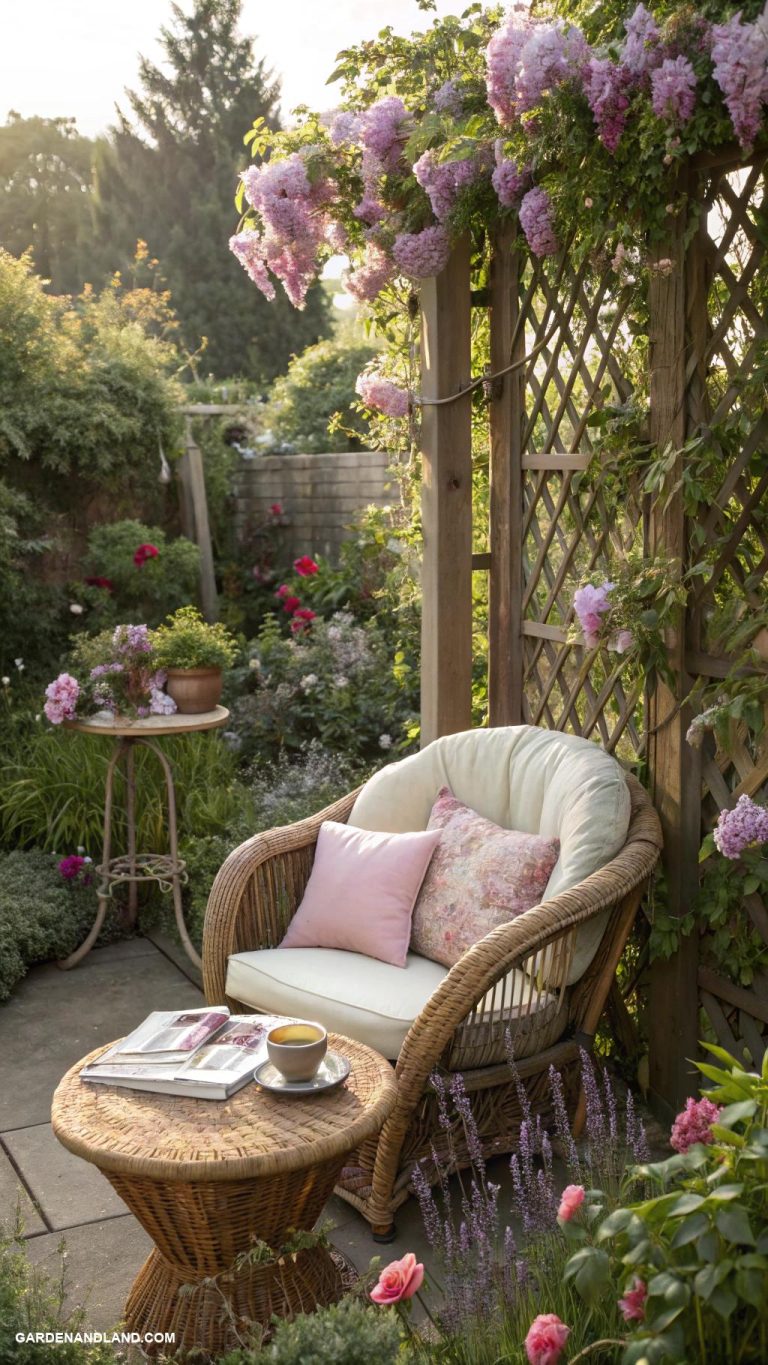
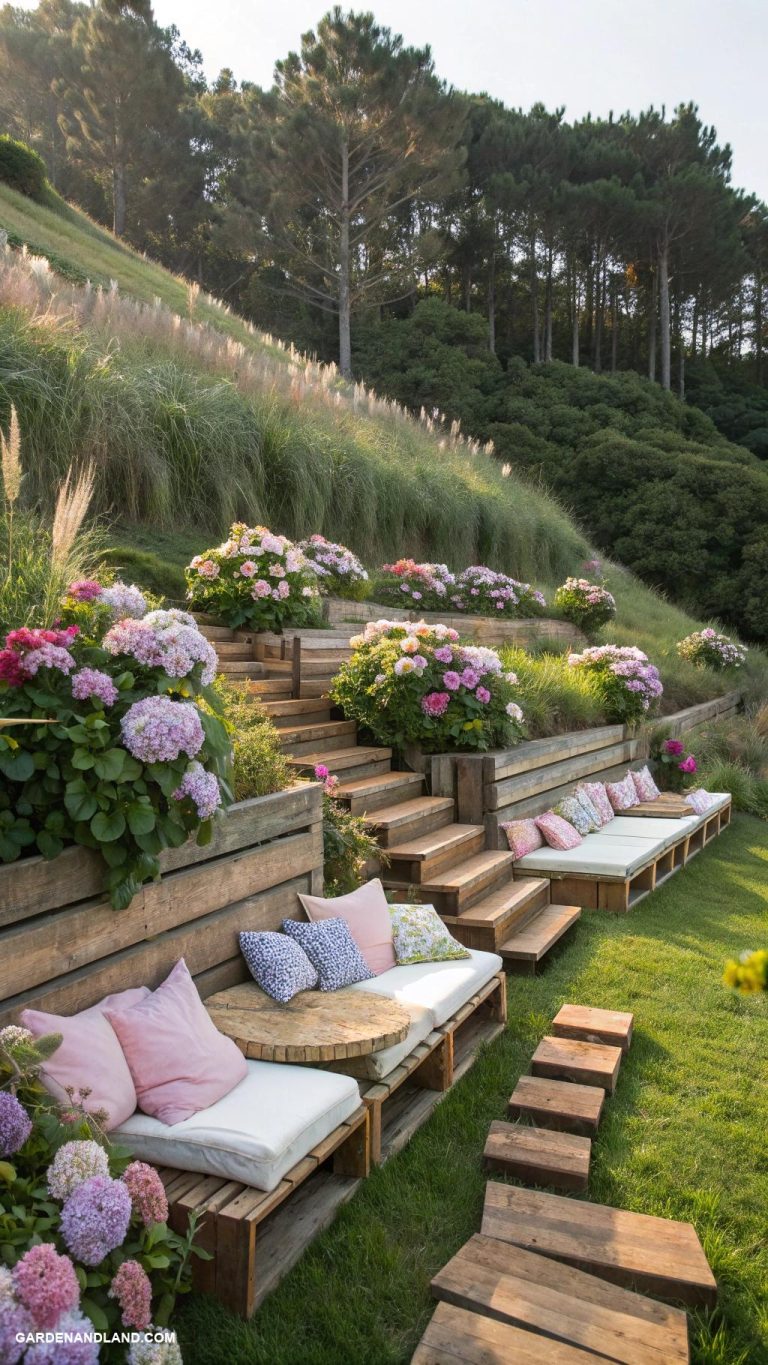
Transforming a dry creek bed into a serene seating area can enhance the natural beauty of your garden while providing a peaceful retreat. Begin by selecting smooth, flat stones to create a rustic seating arrangement along the banks, integrating cushions for comfort. Surround this area with native plants and ornamental grasses to soften the edges and promote a sense of tranquility. Adding ambient lighting, such as solar lanterns or string lights, can create a cozy atmosphere for evening relaxation.
Utilize Salvaged Materials for Aesthetics
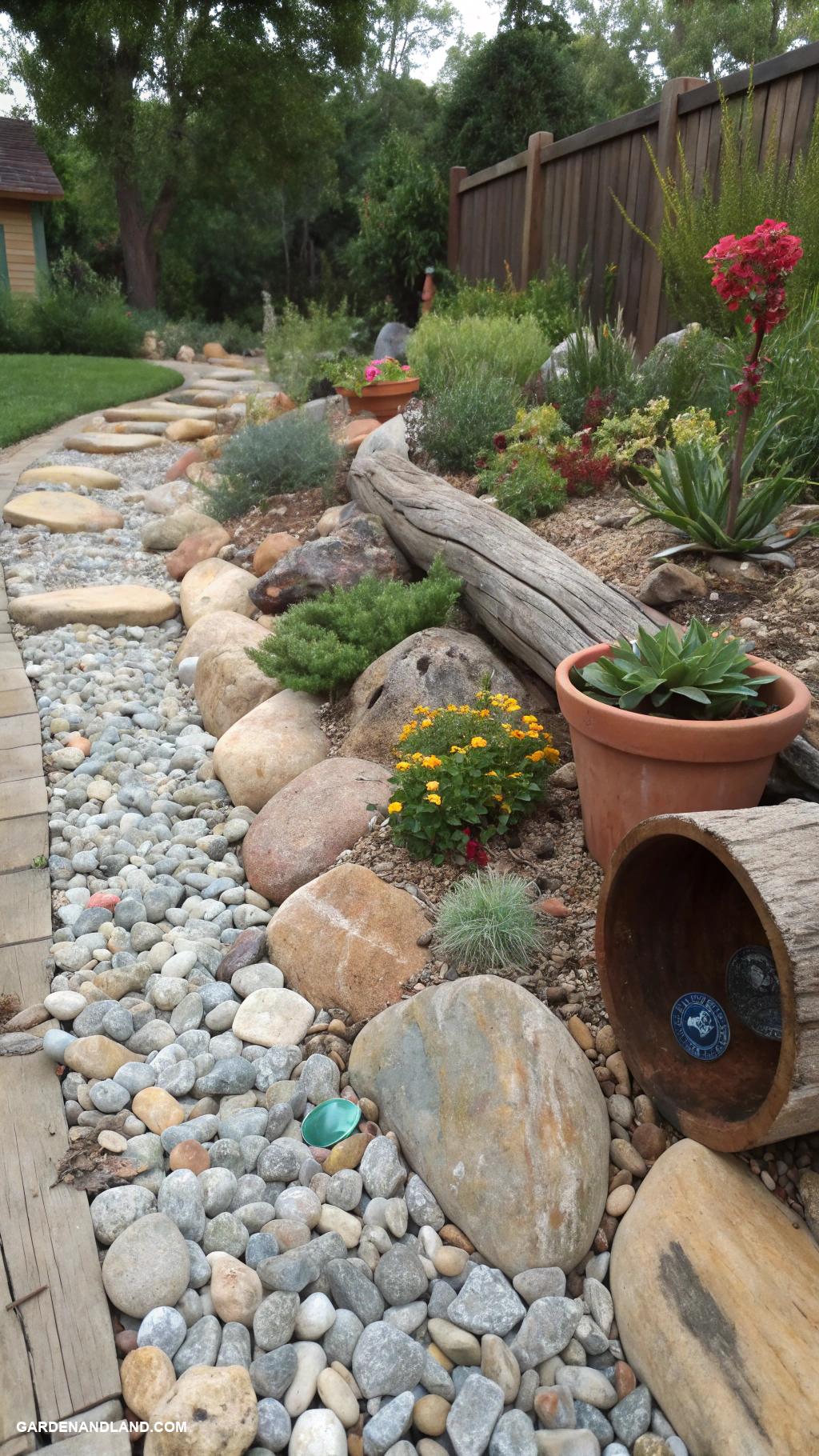
Incorporating salvaged materials into your dry creek bed design adds both aesthetic appeal and eco-friendliness to your landscape. By using reclaimed stones, bricks, or wood, you can create a visually interesting contrast against the smooth river rocks typically found in such settings. Not only do these materials offer a rustic charm, but they also tell a story of sustainability, giving your garden a unique personality. This approach not only enhances the visual allure of the creek bed but also promotes the idea of repurposing, making your garden an inspiring example of modern landscaping practices.
Create Wildlife Habitats with Logs
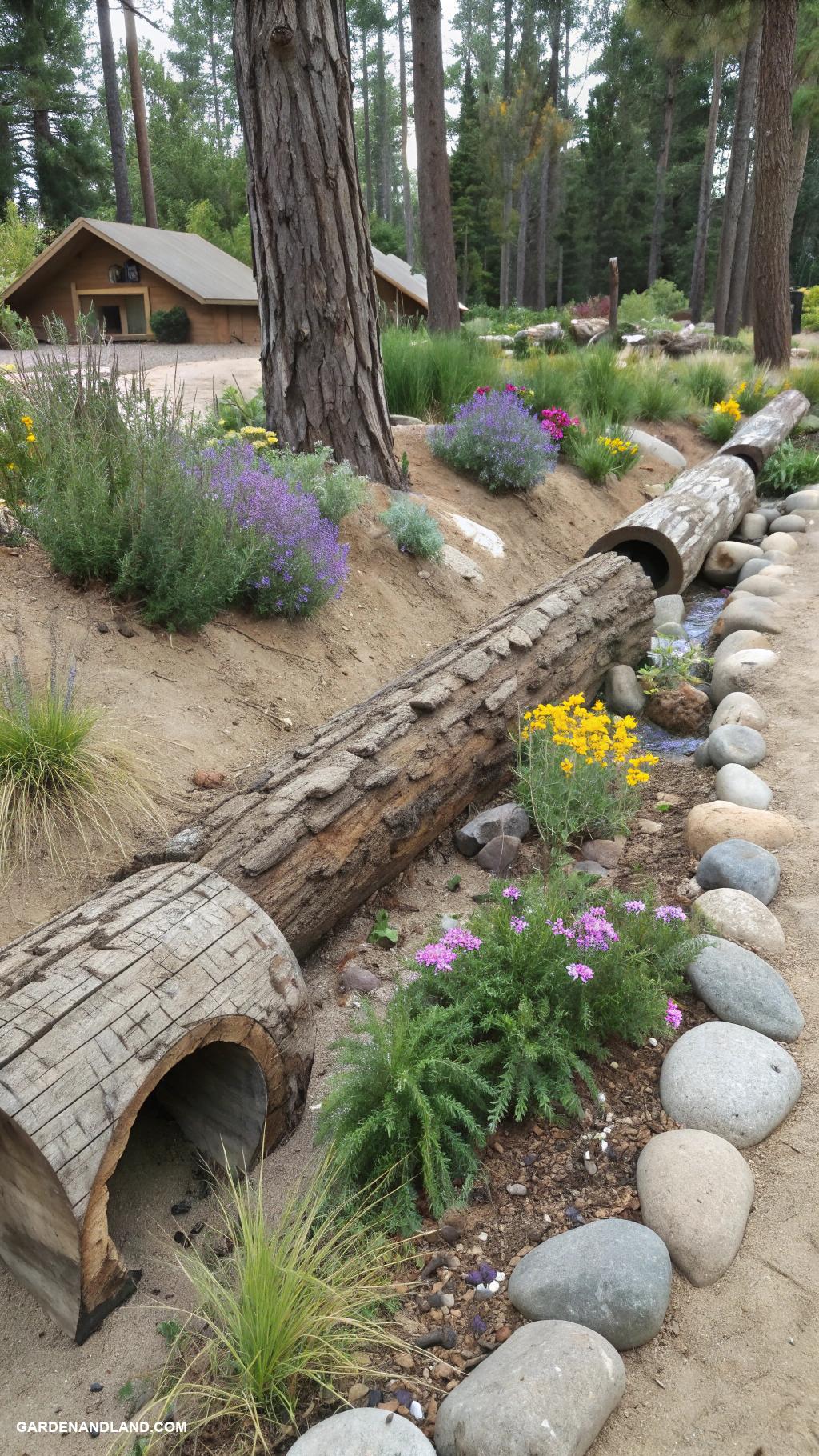
Creating wildlife habitats with logs in a dry creek bed can enhance both the aesthetics and biodiversity of your garden. By strategically placing fallen logs along the creek’s edges, you can provide shelter and nesting sites for various creatures, from birds to beneficial insects. As the logs decompose, they enrich the surrounding soil, promoting healthy plant growth and attracting pollinators. This natural approach not only supports local wildlife but also adds an organic charm to your landscape design.